
Every year, more and more travellers look for something different for New Year’s Eve than the classic European capitals: fewer lights, more feeling. Morocco has become one of the most interesting answers — a destination 3.5 hours from Greece, with a mild winter, cities full of life and a desert where the turn of the year carries a different weight.
In this guide you will find what is worth knowing before you decide: how New Year is celebrated in Morocco, what a Sahara réveillon is really like, the winter weather, what to see along the way, and the practical details of the journey.
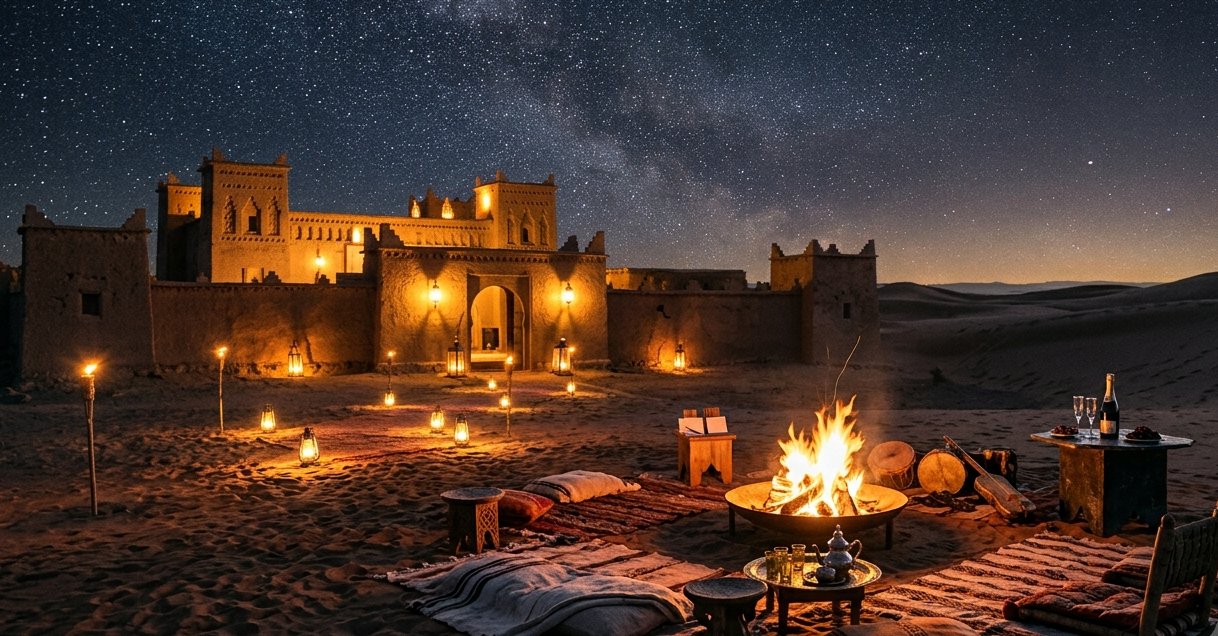 Two things are worth knowing before you choose it: first, December nights in the desert are genuinely cold, so it matters that you stay in a heated kasbah rather than a simple tent. And second, the experience depends on the organisation: the fire, the music and the set-up on the sand are not a given — they need planning, and a plan B for the weather.
How New Year is celebrated in Morocco
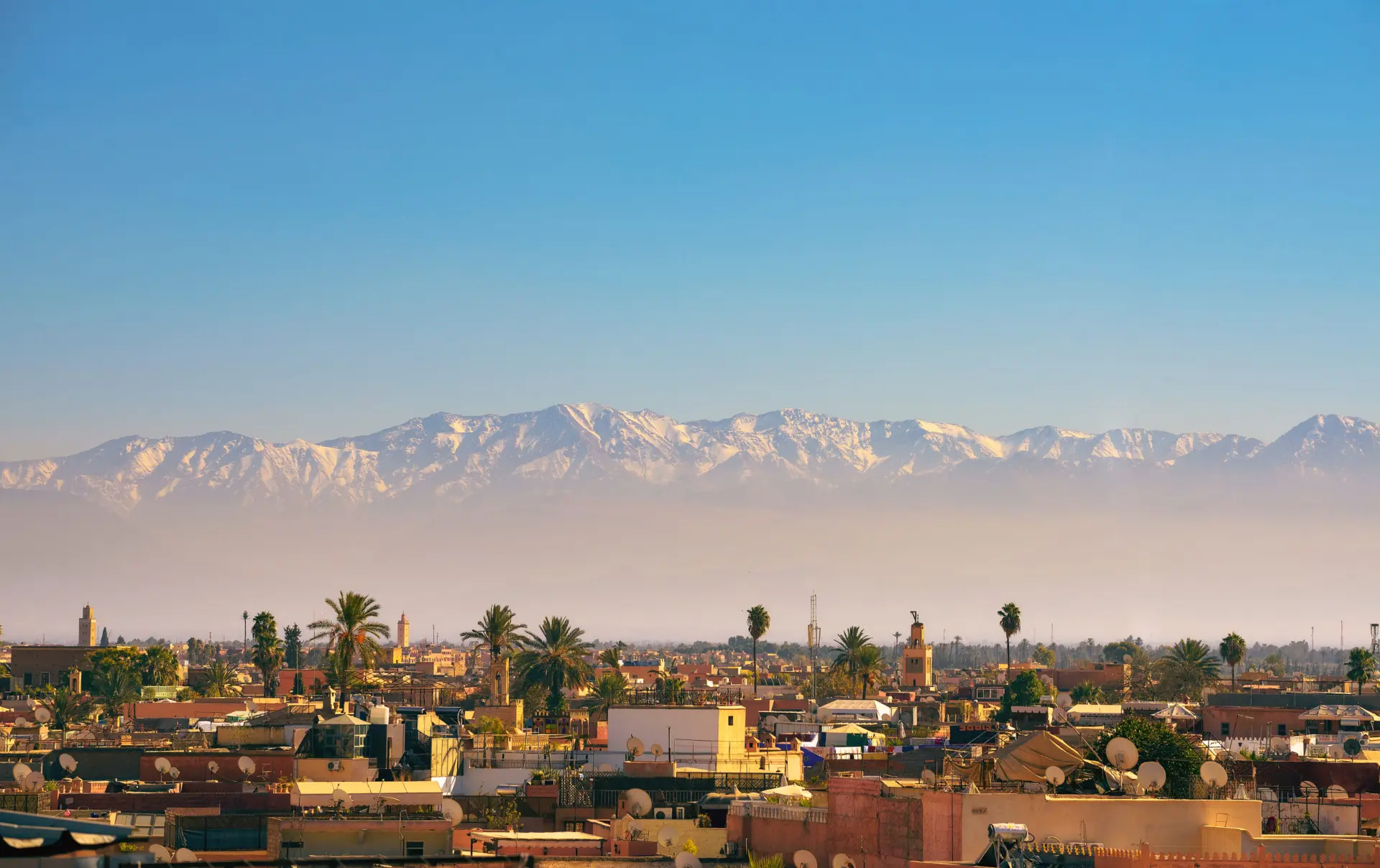
Morocco is a Muslim country with its own calendar of feasts — and yet the western New Year is celebrated with enthusiasm, especially in the big cities. In Marrakech, hotels and riads lay on festive dinners and galas, the rooftops fill up, and Jemaa el-Fna keeps its own pulse late into the night. For locals it is mainly a night of outward-looking celebration; for travellers, a rare chance to see a familiar feast in a completely different light. An interesting detail few people know: Morocco has a second New Year. Yennayer, the Amazigh (Berber) New Year, is celebrated in mid-January with traditional dishes and family tables, and is now an official public holiday in the country.Réveillon in the Sahara: what it is really like
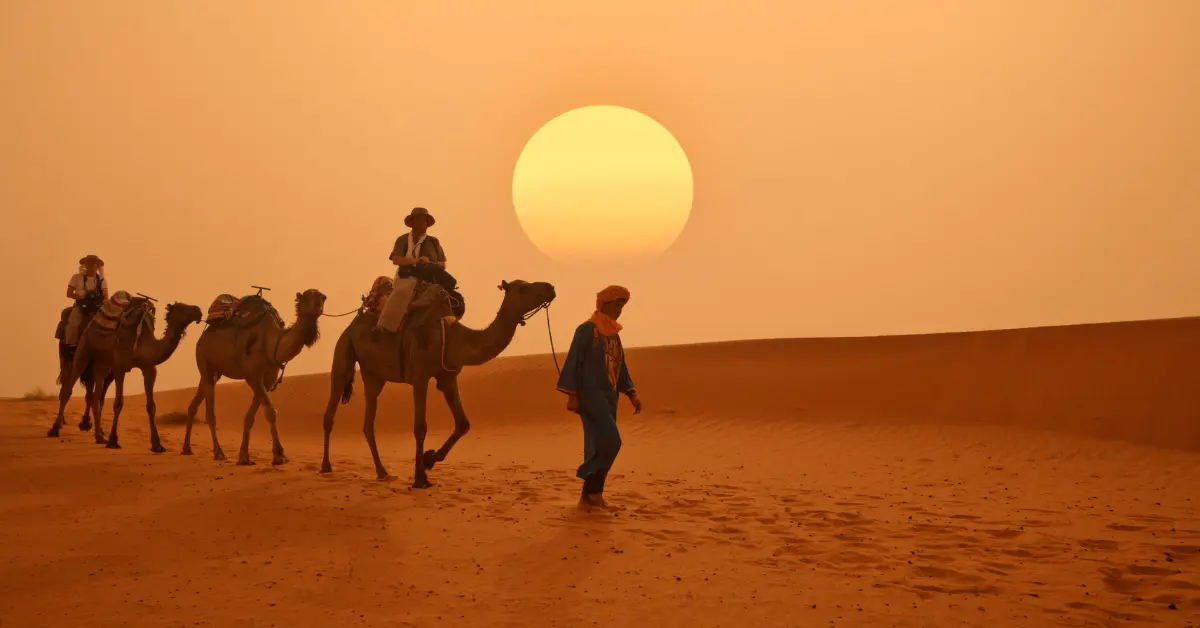
The most special version of New Year in Morocco is not found in any ballroom. It lies in the dunes of Erg Chebbi, outside Merzouga — where the road ends and the Sahara begins. A desert réveillon has its own liturgy: a festive dinner in a kasbah or an organised desert camp, fire on the sand, traditional music — often Gnawa, the hypnotic musical tradition with roots in sub-Saharan communities, recognised by UNESCO as intangible cultural heritage — and, above all, the clearest starry sky you have ever seen. Winter is the ideal season for stargazing in the Sahara: dry air, almost zero light pollution. Midnight in the desert is nothing like a countdown on a screen. With no city lights and no noise, the turn of the year becomes something you live with all your senses: the music, the fire, the silence of the sand — and the sky above.
Two things are worth knowing before you choose it: first, December nights in the desert are genuinely cold, so it matters that you stay in a heated kasbah rather than a simple tent. And second, the experience depends on the organisation: the fire, the music and the set-up on the sand are not a given — they need planning, and a plan B for the weather.
The weather in December and January
The Moroccan winter is one of the destination’s great assets. In Marrakech, days usually sit at 18–20°C with plenty of sunshine — ideal for walking the Medina — while at night the temperature drops noticeably, to around 5–8°C. In the desert the contrast grows: pleasant sunny days around 15–20°C and nights that can approach zero. The suitcase, therefore, wants layers: light clothes and sunscreen for the day, a warm jacket, beanie and scarf for the nights — especially if you plan to welcome the new year on the sand. In the Atlas mountains, which you cross on the way south, the passes exceed 2,000 metres and you may even see snow on the peaks — one of Morocco’s most unexpected backdrops.What to see in the wider region
The route from Marrakech to the Sahara crosses some of the most impressive landscapes in the country:- Tizi n’Tichka pass: the road that climbs the High Atlas to 2,260 metres, with views that change at every bend.
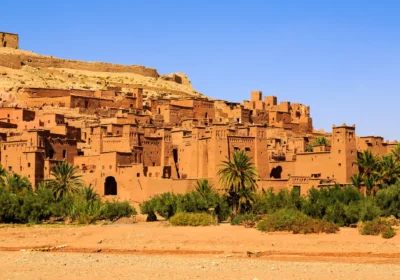
- Ait Ben Haddou: Morocco’s most famous fortified ksar, a UNESCO monument and the set of countless films — ideal early in the morning, before the day’s groups arrive.
- Ouarzazate & Atlas Studios: the «Hollywood of the desert», where everything from Gladiator to Game of Thrones was filmed.
- Todra Gorge: vertical red walls hundreds of metres high, with a walk along the canyon floor.
- Skoura: an atmospheric palm grove full of kasbahs, one of the most cinematic stops of the return leg.
- Khamlia village: a few kilometres from Merzouga, known for its living Gnawa music tradition.
- Marrakech: the Bahia Palace, the Ben Youssef Madrasa, the Majorelle Gardens (book ahead — December queues are real) and of course Jemaa el-Fna at dusk, when the stalls light up and the square becomes a stage.