
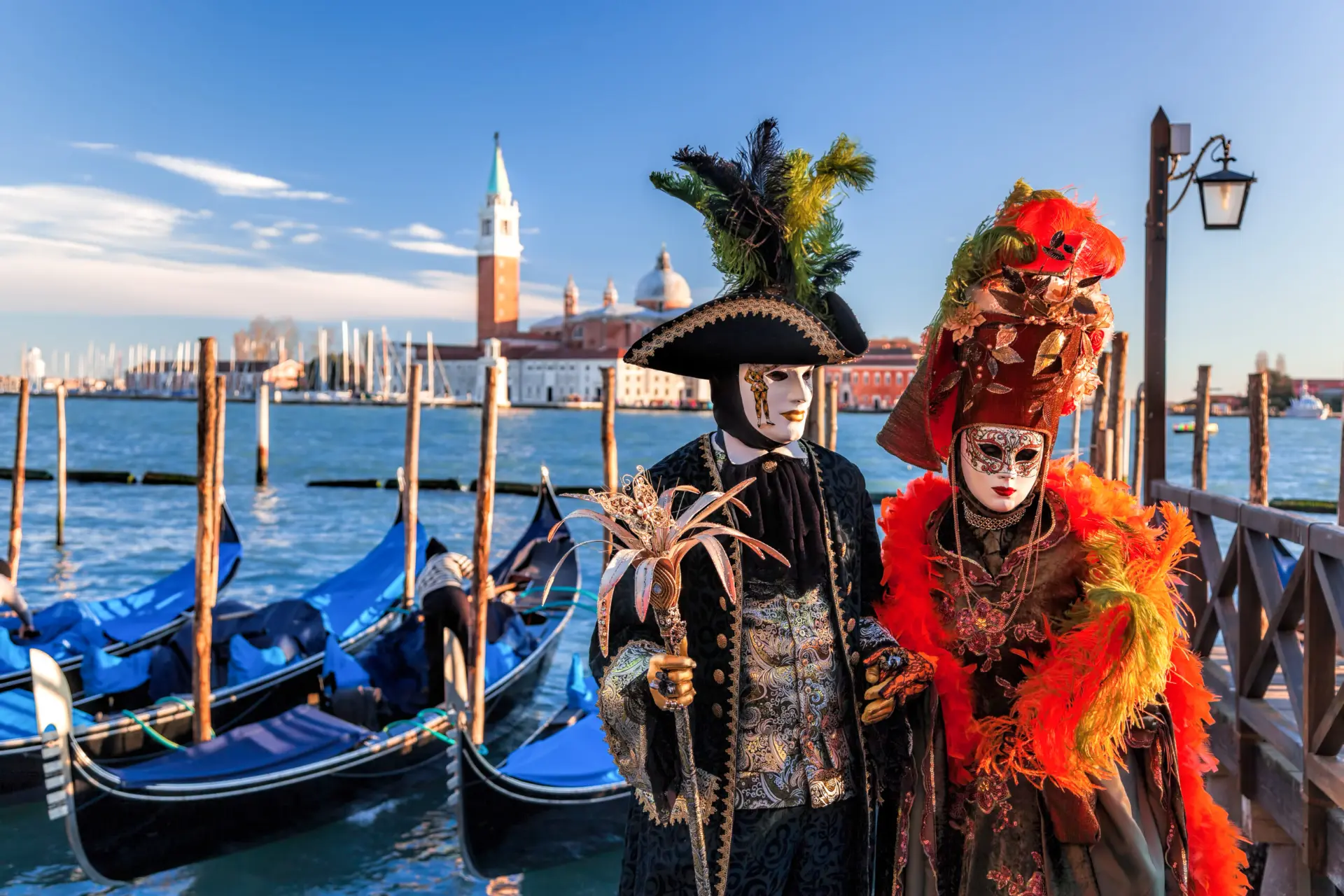
There are festivals you attend. And then there is the Venice Carnival, where — done right — you are not a spectator. You are inside the set.
The Venice Carnival is the most theatrical event in Europe: an entire city with no cars, built on water, filled with figures in velvet, brocade and porcelain faces who never speak. It resembles no other carnival — no floats, no confetti cannons. It has silence, fog and mystery.
This guide is what I would tell you if we were sitting across a table.
 The costumed figures come out with the first light, before the crowds, for the photographers and for the magic. At 7:30 in the morning, with the lagoon fog and the lanterns still lit, you will see scenes you won’t believe aren’t staged. It’s the strongest frame of the whole trip — and it’s free.
The etiquette is simple: the figures pose gladly — ask with a nod, don’t speak loudly, thank them with a small bow. They don’t talk; it’s part of the role.
The costumed figures come out with the first light, before the crowds, for the photographers and for the magic. At 7:30 in the morning, with the lagoon fog and the lanterns still lit, you will see scenes you won’t believe aren’t staged. It’s the strongest frame of the whole trip — and it’s free.
The etiquette is simple: the figures pose gladly — ask with a nod, don’t speak loudly, thank them with a small bow. They don’t talk; it’s part of the role.
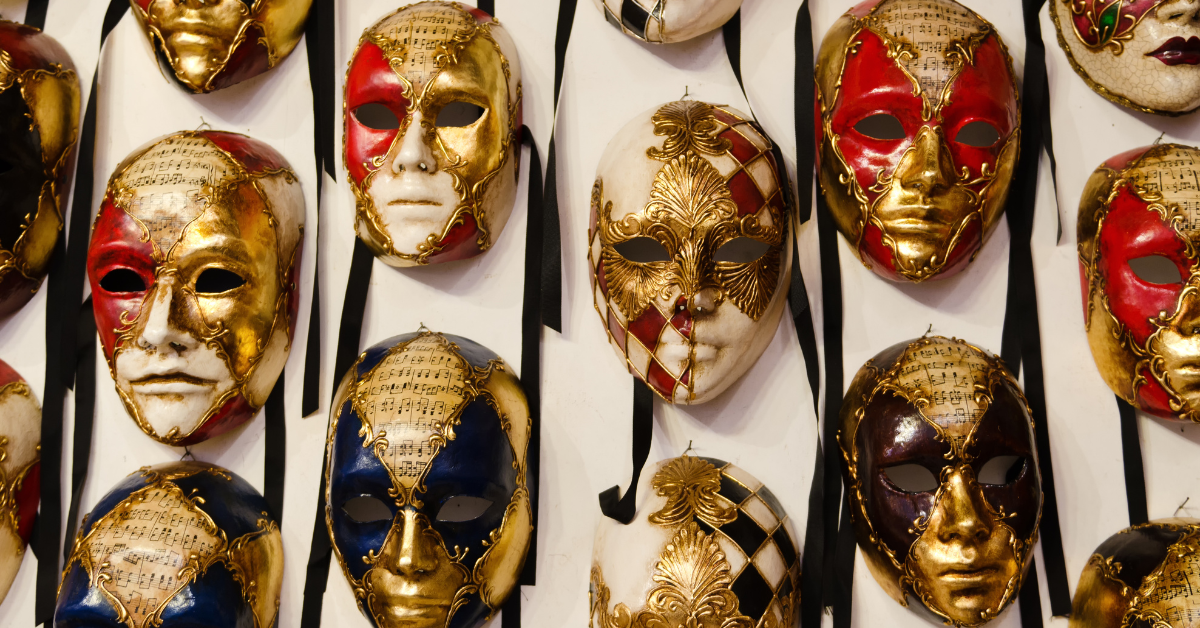 In the alleys you’ll see thousands of shop windows full of masks. Most are imported. Real Venetian masks are made of papier-mâché in artisan workshops (botteghe) using a centuries-old technique — hand-painted, feather-light, signed by the maker. The difference shows in the weight and the price, and it’s worth it: this is the souvenir that won’t end up in a drawer.
 St Mark’s Basilica with its Byzantine mosaics — yes, Byzantine: Venice is the most “Greek” city of the West, built with the art and the spoils of Constantinople. The Doge’s Palace and the Bridge of Sighs from the inside. The Rialto early in the morning, when the fish market still works for the locals.
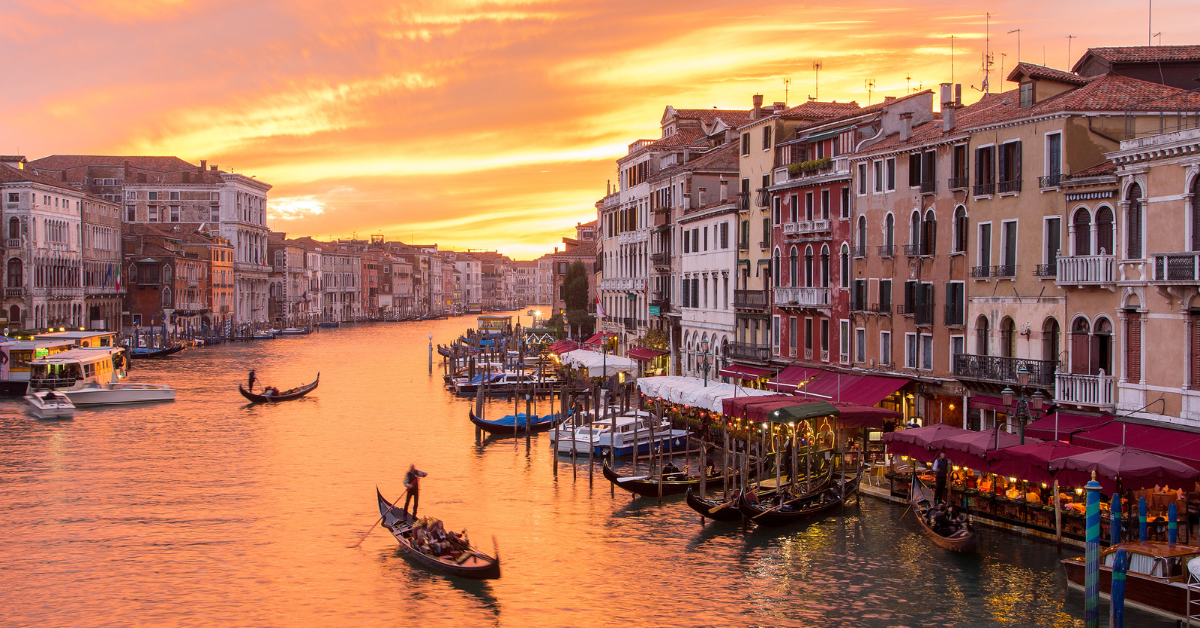
And the best advice we can give: get lost. Two alleys away from the main flows, Venice empties abruptly and becomes yours — a courtyard, a cat, a leaning bell tower. The vaporetto down the Grand Canal at dusk, with the palazzi lighting up one by one, is Europe’s most beautiful “cruise” — and with the 48-hour Venice Lagoon Pass included in our programme, you hop on and off as you please.
About acqua alta, honestly: in winter the sea occasionally rises for a few hours in the low-lying spots. The city carries on — walkways are set up, locals put on boots and keep moving. It doesn’t spoil the trip; it just needs the right shoes and a relaxed attitude. Sometimes it even gifts you the most unreal mirror you will ever photograph.
St Mark’s Basilica with its Byzantine mosaics — yes, Byzantine: Venice is the most “Greek” city of the West, built with the art and the spoils of Constantinople. The Doge’s Palace and the Bridge of Sighs from the inside. The Rialto early in the morning, when the fish market still works for the locals.
And the best advice we can give: get lost. Two alleys away from the main flows, Venice empties abruptly and becomes yours — a courtyard, a cat, a leaning bell tower. The vaporetto down the Grand Canal at dusk, with the palazzi lighting up one by one, is Europe’s most beautiful “cruise” — and with the 48-hour Venice Lagoon Pass included in our programme, you hop on and off as you please.
About acqua alta, honestly: in winter the sea occasionally rises for a few hours in the low-lying spots. The city carries on — walkways are set up, locals put on boots and keep moving. It doesn’t spoil the trip; it just needs the right shoes and a relaxed attitude. Sometimes it even gifts you the most unreal mirror you will ever photograph.
 The fourth day of our programme is spent on the islands — and it’s the day most people say they didn’t expect to love this much.
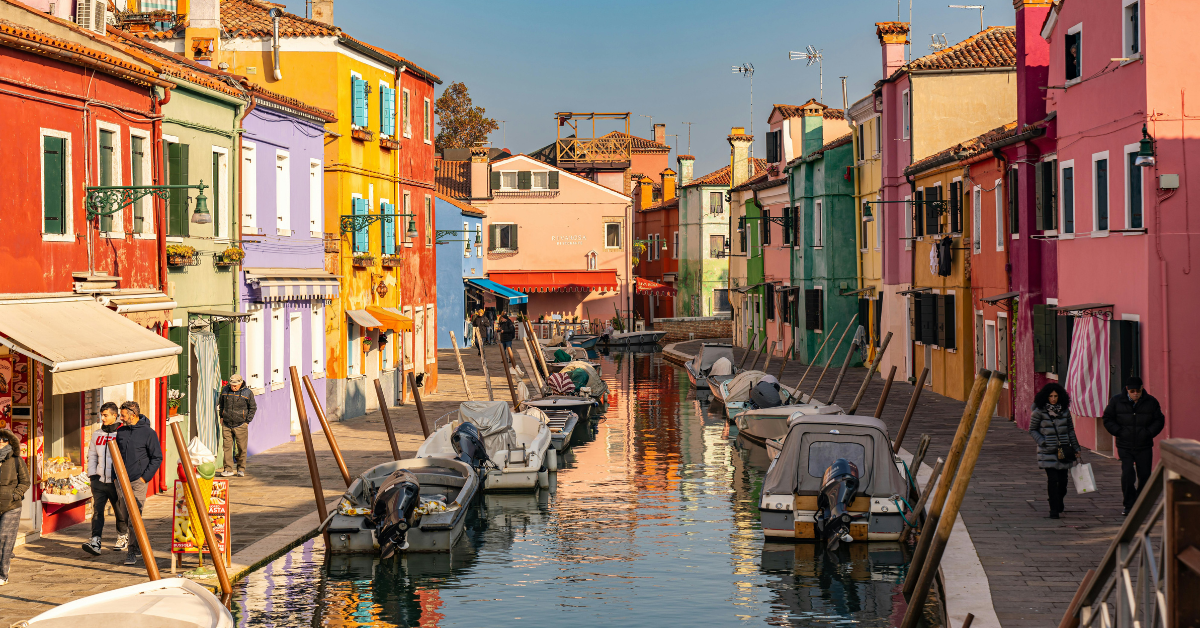
On Murano, the glassmakers work the glass in front of you as they have for seven centuries — the moment when molten glass becomes a horse in thirty seconds is one of those things words don’t carry. Burano is the most colourful village in the Mediterranean: houses painted fuchsia, turquoise, yellow — each family its own colour, by law. With the low winter sun, the photographs take themselves.
The fourth day of our programme is spent on the islands — and it’s the day most people say they didn’t expect to love this much.
On Murano, the glassmakers work the glass in front of you as they have for seven centuries — the moment when molten glass becomes a horse in thirty seconds is one of those things words don’t carry. Burano is the most colourful village in the Mediterranean: houses painted fuchsia, turquoise, yellow — each family its own colour, by law. With the low winter sun, the photographs take themselves.
George Gialamas Founder & Managing Director, Genius Travel
What it actually is — and why it’s like nothing else
In Venice, the mask was never just a costume. From the 12th century, in the Most Serene Republic, the mask meant equality: behind it, the doge and the gondolier were the same. The city lived masked for months every year — until Napoleon dissolved the Republic in 1797 and banned the Carnival along with it. For nearly two centuries, nothing. Then in 1979 the city brought it back to life — not as a revival for tourists, but as a return to its identity. The silent figures posing today in St Mark’s Square continue that tradition: it isn’t a parade, it’s a ritual.When — and the trap with the Greek calendar
Carnival 2027 begins in late January and peaks between 6 and 9 February, culminating on Martedì Grasso — Shrove Tuesday — on 9 February. And here is the detail most people discover too late: the Venice Carnival follows the Catholic calendar — in 2027 it falls more than a month before the Greek Apokries (Orthodox Clean Monday is 15 March). If you wait for the Greek carnival long weekends to plan it, you’ll arrive in a Venice that has already put its masks away. Our departure on 4 February is timed precisely on the finale: you catch the last, greatest crescendo — the days when the city gives everything. An honest word about the crowds: on the two final weekends, St Mark’s Square is packed solid at midday. The secret isn’t avoiding it — it’s knowing when: early in the morning and after six in the evening, the same square is another planet.The experience — what is truly worth it
Dawn in St Mark’s Square
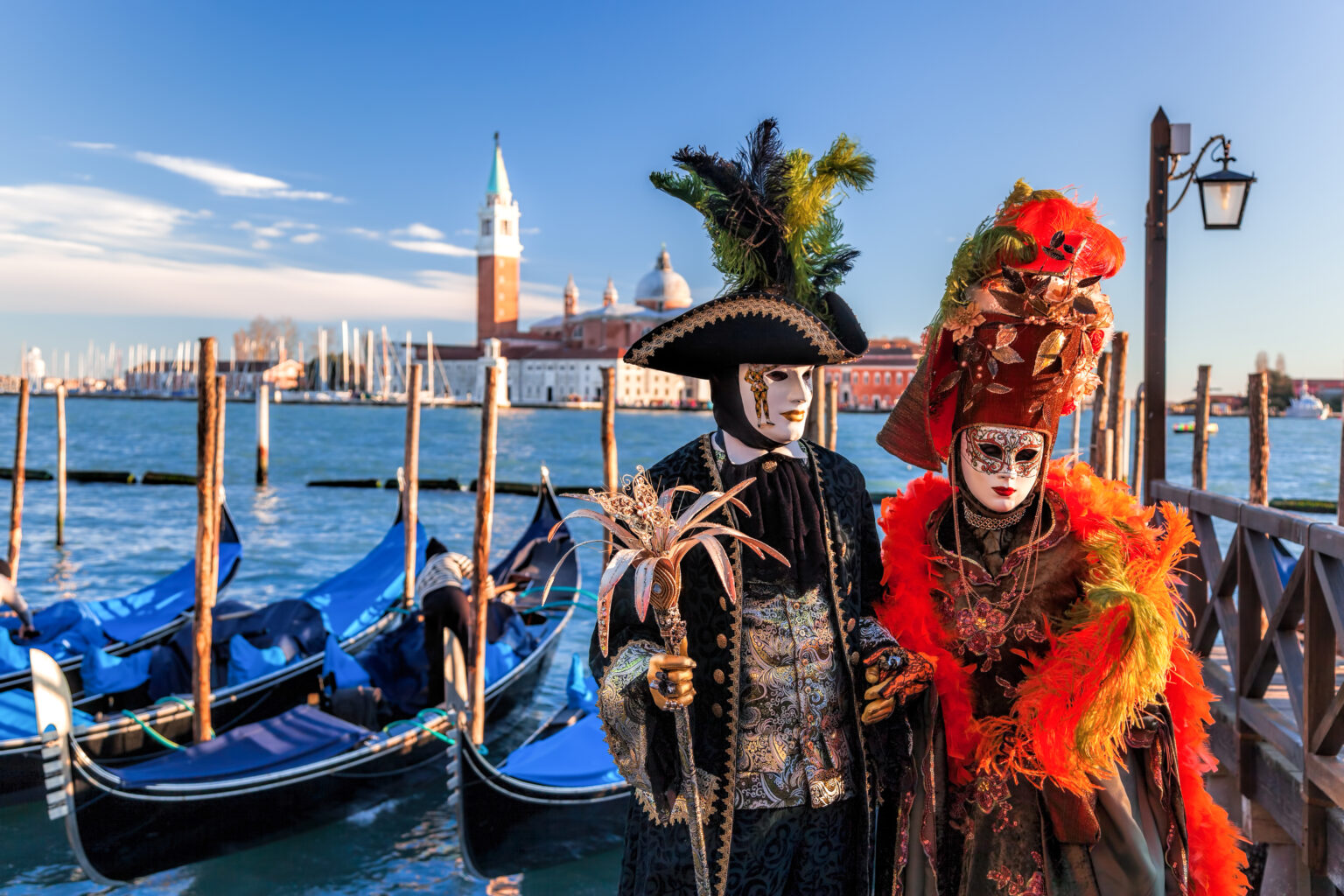
The costumed figures come out with the first light, before the crowds, for the photographers and for the magic. At 7:30 in the morning, with the lagoon fog and the lanterns still lit, you will see scenes you won’t believe aren’t staged. It’s the strongest frame of the whole trip — and it’s free.
The etiquette is simple: the figures pose gladly — ask with a nod, don’t speak loudly, thank them with a small bow. They don’t talk; it’s part of the role.
The masks — the real ones
In the alleys you’ll see thousands of shop windows full of masks. Most are imported. Real Venetian masks are made of papier-mâché in artisan workshops (botteghe) using a centuries-old technique — hand-painted, feather-light, signed by the maker. The difference shows in the weight and the price, and it’s worth it: this is the souvenir that won’t end up in a drawer.
Frittelle: the sweet that exists only now
Frittelle — fried carnival doughnuts with raisins, cream or zabaione — are made in Venice only during Carnival. Together with the crisp galani, they’re the reason the queues outside the historic pasticcerie are part of the experience. A warm frittella in your hand, walking beside a canal: that is the Venetians’ own Carnival.The balls — and an honest word
The grand masked balls in the palazzi, most famously the Ballo del Doge, are spectacular — and cost as much as the entire trip, with a period dress code hired separately. Our honest view: the real show is in the street, and it’s free. If the ball is your dream, it can be arranged — tell us early. For everyone else, the money goes further on a proper dinner and a real mask.Venice beyond the masks
St Mark’s Basilica with its Byzantine mosaics — yes, Byzantine: Venice is the most “Greek” city of the West, built with the art and the spoils of Constantinople. The Doge’s Palace and the Bridge of Sighs from the inside. The Rialto early in the morning, when the fish market still works for the locals.
And the best advice we can give: get lost. Two alleys away from the main flows, Venice empties abruptly and becomes yours — a courtyard, a cat, a leaning bell tower. The vaporetto down the Grand Canal at dusk, with the palazzi lighting up one by one, is Europe’s most beautiful “cruise” — and with the 48-hour Venice Lagoon Pass included in our programme, you hop on and off as you please.
About acqua alta, honestly: in winter the sea occasionally rises for a few hours in the low-lying spots. The city carries on — walkways are set up, locals put on boots and keep moving. It doesn’t spoil the trip; it just needs the right shoes and a relaxed attitude. Sometimes it even gifts you the most unreal mirror you will ever photograph.
Murano and Burano: the other side of the lagoon
The fourth day of our programme is spent on the islands — and it’s the day most people say they didn’t expect to love this much.
On Murano, the glassmakers work the glass in front of you as they have for seven centuries — the moment when molten glass becomes a horse in thirty seconds is one of those things words don’t carry. Burano is the most colourful village in the Mediterranean: houses painted fuchsia, turquoise, yellow — each family its own colour, by law. With the low winter sun, the photographs take themselves.
The smart design — and why we say it openly
Why we sleep in Mestre and not on the island. During Carnival week, hotels in insular Venice charge multiples of their normal rates — often for tired rooms with a “view” of a wall. We choose a 4-star hotel in Mestre: ten minutes from the historic centre, modern rooms, quiet sleep — and the difference goes into the experience instead of the overnight. With the Lagoon Pass, getting across isn’t even a thought. Why we fly to Milan and not Venice. Our route opens with a direct Aegean flight to Milan and returns from there — and in between it builds a whole journey: Lake Garda with its winter mirror, romantic Verona, two full days of Venice, the islands, and a finale in medieval Bergamo, perched on its walls. Five days that aren’t “Venice on swollen feet” — they’re Northern Italy with a beginning, a middle and a crescendo.Practical matters — what people actually ask
Cold. February on the lagoon means 3–10°C and humidity. Layers, a warm coat, a scarf — and the shoes we mentioned. The fog isn’t the enemy; it’s the filter that makes Venice, Venice. Restaurant bookings. On Carnival weekends the good tables are gone days ahead. On our programme we take care of it — if you head out on your own some evening, book early or do as the locals do: the bacari, Venice’s wine-and-bites bars, for cicchetti and a spritz standing up, no reservation needed. Your wallet. In the crowds of the main flows, the usual rule of every great European festival applies: bag in front, nothing in the back pocket. Cash and cards. Cards everywhere; a little cash for frittelle, boatmen and small things. Photography. The best light: 7–9 in the morning, and the blue hour after sunset. The figures pose — the phone shots over heads in the midday crowd don’t.Why an organised trip makes the difference here
The season. Carnival is Venice’s most expensive, most crowded week. Hotels, transfers and tables lock up months ahead — the programme solves what would cost you days of searching and a respectable sum in mistakes. The route. Garda, Verona, Venice, the islands, Bergamo — with one suitcase, one coach and one person who knows where they’re standing. On your own, that’s four train bookings with luggage on bridge steps. The timing. In Carnival Venice, the difference between “I saw it” and “I lived it” is being in the right place at the right hour. That isn’t written in brochures — it’s our job.Where to start
If the Venice Carnival is on your list — and at some point it will be — 2027 has one advantage: you already know the right dates. Carnival-week places are the first to sell out every year. And if you’re not sure, ask us. We’ll also tell you what doesn’t suit you. La Serenissima — Venice Carnival 2027, 5 days · All our Italy programmesGeorge Gialamas Founder & Managing Director, Genius Travel